Developing Evidence-Based Materials for Addictions Counselling
In a world of ubiquitous and often contradictory information and opinions, understanding the complexities of addiction with informed, evidence-based knowledge can be challenging for clinicians and patients alike.
Thankfully, researchers at the internationally renowned Peter Boris Centre for Addictions Research (PBCAR) at St. Joseph’s Healthcare Hamilton are using knowledge translation projects to help transform the way people experiencing addiction receive counselling.
Deirdre Querney and Dr. Iris Balodis are behind two Peter Boris Centre projects – Brain Connections and Bud Talks – that develop evidence-based counselling resources for those affected by problem gambling and cannabis, respectively.

Dr. Iris Balodis is the Associate Director of the Peter Boris Centre for Addictions Research, and an associate professor in the Department of Psychiatry and Behavioural Neurosciences at McMaster University.
Deirdre Querney, MSW, is a Registered Social Worker and Certified Problem Gambling Counsellor at the City of Hamilton’s Public Health Services, working in a program called Alcohol, Drug, and Gambling Services (ADGS).
The pair first met in 2015, shortly after Dr. Balodis started working at McMaster University. A key part of her gambling research projects involved connecting with the community, so she reached out to ADGS to learn how she could support the program. Together, Querney and Dr. Balodis received a BET 15K grant from the Gambling Research Exchange Ontario (GREO) to remodel ADGS’ handouts about the impact of gambling on the brain.
To develop these handouts, Querney asked people who were using the gambling treatment services at the ADGS about their questions on gambling addiction’s neurobiological impact. From there, Dr. Balodis prepared evidence-based answers to these questions, which were the basis of each handout.
This knowledge translation work started with five gambling-focused handouts and has expanded significantly since then. Querney and Dr. Balodis received further funding to create Brain Connections, a suite of tools that include handouts and videos all free and accessible on their website: www.brainconnections.ca
Brain Connections & Bud Talks
Brain Connections summarizes issues related to gambling and the brain in an accessible, engaging way to reach a wide audience. With further funding from GREO, Querney and Dr. Balodis went on to create tools oriented to youth about the neurobiological impact of video game addiction and the crossover between video games and gambling.
Gaming disorder is a condition in which video games negatively affect some aspect of someone’s life, including their mental and physical health, relationships, education, and finances. Researchers estimate that 1 in 5 Ontario students meet the criteria for gaming disorder.
Some video games may not seem very similar to gambling, however many of them have features that can become a gateway to gambling – micro-transactions (such as loot boxes) are particularly associated with the development of gaming and gambling problems.
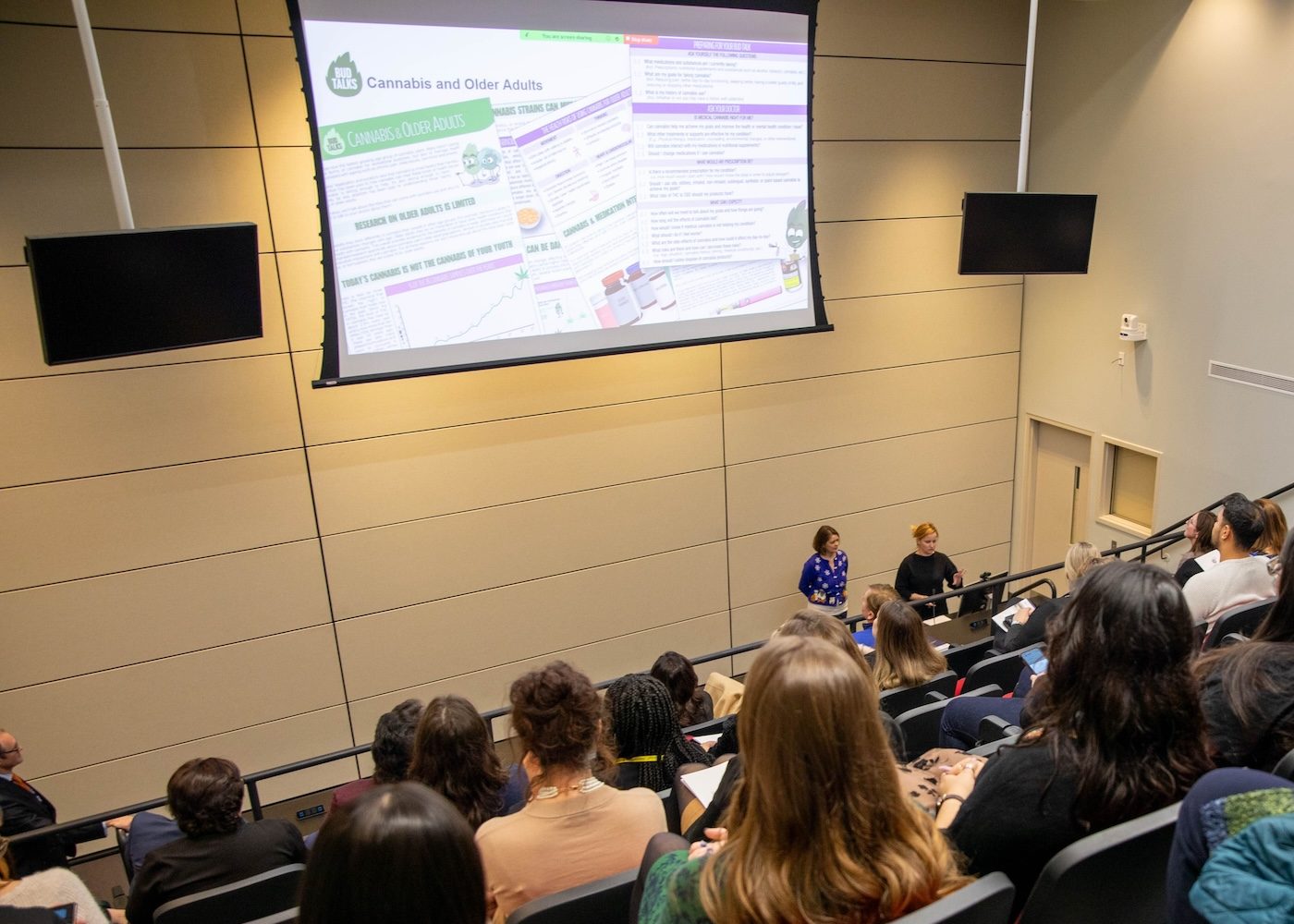
Deirdre Querney (left) and Dr. Iris Balodis (right) presenting on Bud Talks at the 10th anniversary celebration of the Peter Boris Centre for Addictions Research, November 21, 2024.
Bud Talks is another knowledge translation initiative that the duo has started. Rather than addressing gambling, it focuses on cannabis use. Bud Talks is an initiative by the Michael G. DeGroote Centre for Medicinal Cannabis Research (CMCR), which asked Querney, Dr. Balodis, and their team (which now includes a learning design specialist and animators) to develop tools to educate the public about cannabis. So far, two Bud Talks tools have been developed and are available on budtalks.ca: Cannabis and Older Adults and Cannabis Use Disorder.
Brain Connections and Bud Talks are helping dispel myths about problem gambling and cannabis use. For example, many clinicians tell their patients that people get addicted to gambling because of dopamine, but the current gold standard evidence does not support this statement. These handouts provide clinicians with an opportunity to talk about issues that involve the brain while ensuring they are sharing accurate information.
“Counselors often avoid talking about the connections between the brain and problem gambling because it’s a very difficult topic to explain,” Querney said. “These handouts help facilitate a conversation between patient and counselor, based on evidence in the literature.”

Since their inception, these handouts have reached people far beyond Hamilton. Through podcasts, conferences, and workshops, the team has connected with clinicians all over the world who have asked to use these handouts in their own practices. Teachers have also expressed interest in including the Brain Connections video game information in their curriculum to help students understand the risks associated with excessive gaming and with playing games that involve microtransactions.
Querney and Balodis have received two awards for their work in knowledge translation. In 2023, they won the International Council on Responsible Gaming (ICRG) Scientific Achievement award in the education category. They also received the 2024 Paula Goering Collaborative Research and Knowledge Translation Award, which was announced in May 2025.
“This project started with a single handout and has evolved into a body of knowledge translation products that are reaching people around the world,” said Dr. Balodis.
Making Facts and Evidence Easier to Digest
Querney and Balodis recognize the importance of ensuring the information they communicate is not only accurate, but that it’s presented in a way that’s accessible and engaging to people.
All the materials in Brain Connections and Bud Talks are written at a grade 6 reading level and avoid language that may be triggering or invoke shame. They also include illustrated and animated characters (a pink brain and a cannabis bud, respectively) that grab people’s attention and allow them to approach serious topics with curiosity and empathy.
“People who come into my office always gravitate towards the Brain Connections and Bud Talks handouts,” said Querney. “They don’t look like something that’s going to shame you or humiliate you in any way, and it’s very easy for people to feel compassion for these characters.”
Brain Connections and Bud Talks both include narrative devices that allow people to be told a story about the science at hand, rather than being given a list of facts and figures.
“We’re facing a sea of misinformation right now, largely spread by compelling stories that capture you,” said Dr. Balodis. “There’s no reason that we can’t do the same thing with facts and science.”